Reuters reported on April 4 that Iran said Iraq would be exempt from Hormuz restrictions. A day later, a Petronas-chartered tanker carrying Iraqi crude passed through the strait. On April 6, Reuters reported that Iraq’s state oil marketer SOMO told customers to submit loading schedules within 24 hours after the exemption was announced.
That is not a reopened commons. It is politically managed access. Passage is no longer a general rule restored for all, but something granted through specific political relationships. Hormuz is no longer simply a chokepoint. It is a politically administered gate.
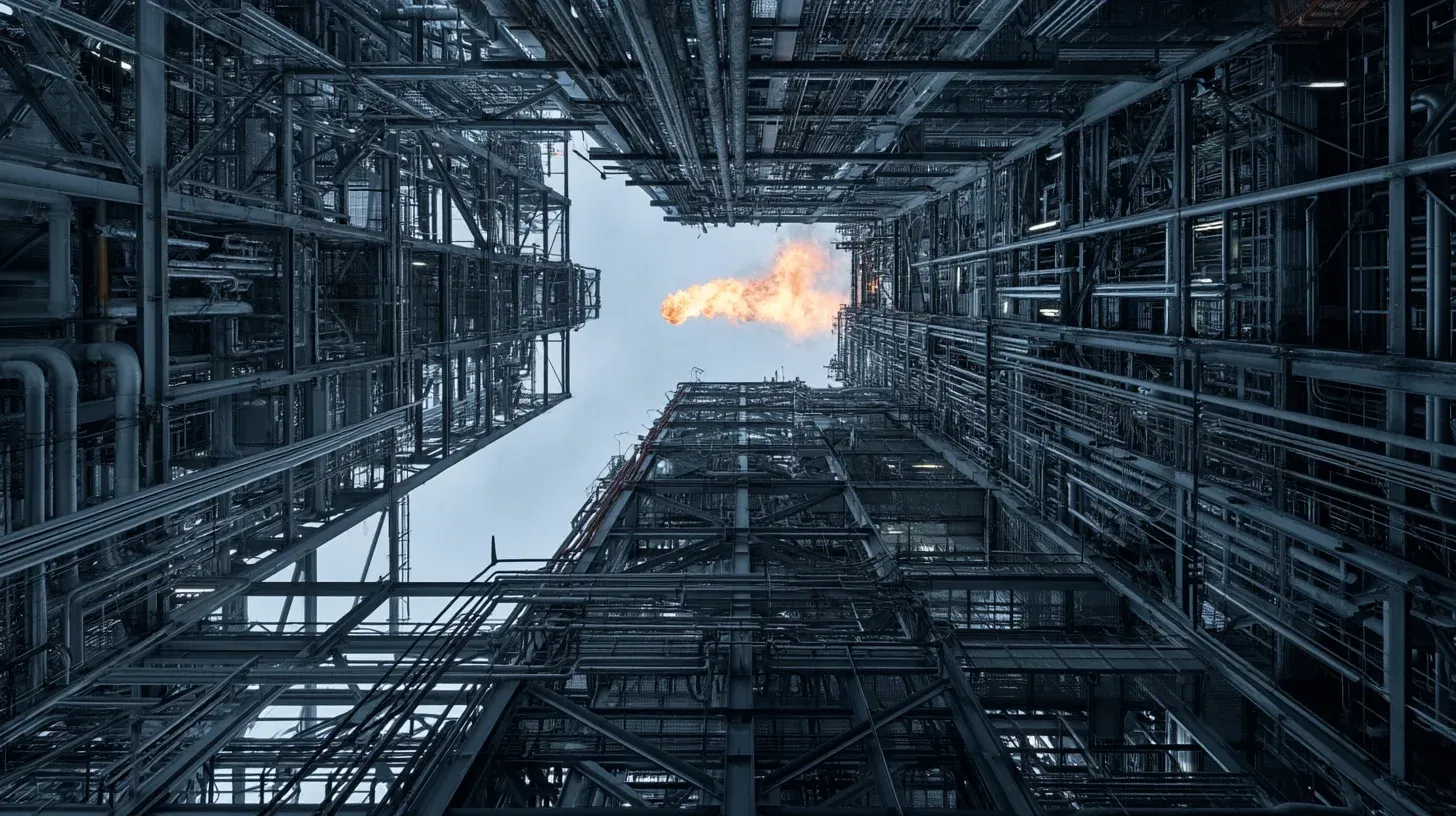
That alone would already mark a serious shift. But the conflict is also moving further down the chain. Reuters reported on April 5 that Iran’s Revolutionary Guards said they had targeted petrochemical facilities in the UAE, Kuwait, and Bahrain. Reuters also reported damage at units in Kuwait’s oil and petrochemical sector after drone attacks.
This is a different level of pressure. A disrupted shipping route can sometimes be managed through rerouting, insurance, or diplomatic carve-outs. An attack on petrochemical infrastructure is harder to route around. It is not just the movement of energy that becomes vulnerable, but the processing architecture that turns raw hydrocarbons into higher industrial value.
That is the real escalation here. Power is no longer exercised only through the threat of closure. It is exercised through selective opening on one side and pressure on value-adding infrastructure on the other. The system becomes less flexible in both directions: fewer actors can move freely, and fewer industrial nodes can reliably process what does move.
This is why the Hormuz story is no longer only about shipping. The conflict is expanding from circulation to processing, from the corridor to the refinery, from controlling flow to targeting the nodes that make flow profitable. That turns a maritime chokepoint into a broader mechanism for sorting who can still participate in Gulf energy value creation.
The winners, for now, are actors with political clearance, tolerated diplomatic ties, or supply routes less exposed to Gulf disruption. The losers are import-dependent economies and industries that rely on predictable Gulf transport, processing, and pricing. Once access and value creation are politicised at the same time, uncertainty rises and room to adapt shrinks.
Hormuz is therefore no longer just a strategic waterway under pressure. It is becoming a politically filtered corridor inside a wider war over circulation and value creation. Once the conflict reaches petrochemical plants as well as shipping lanes, the question is no longer only who gets through. It is who still gets to turn Gulf energy into value.