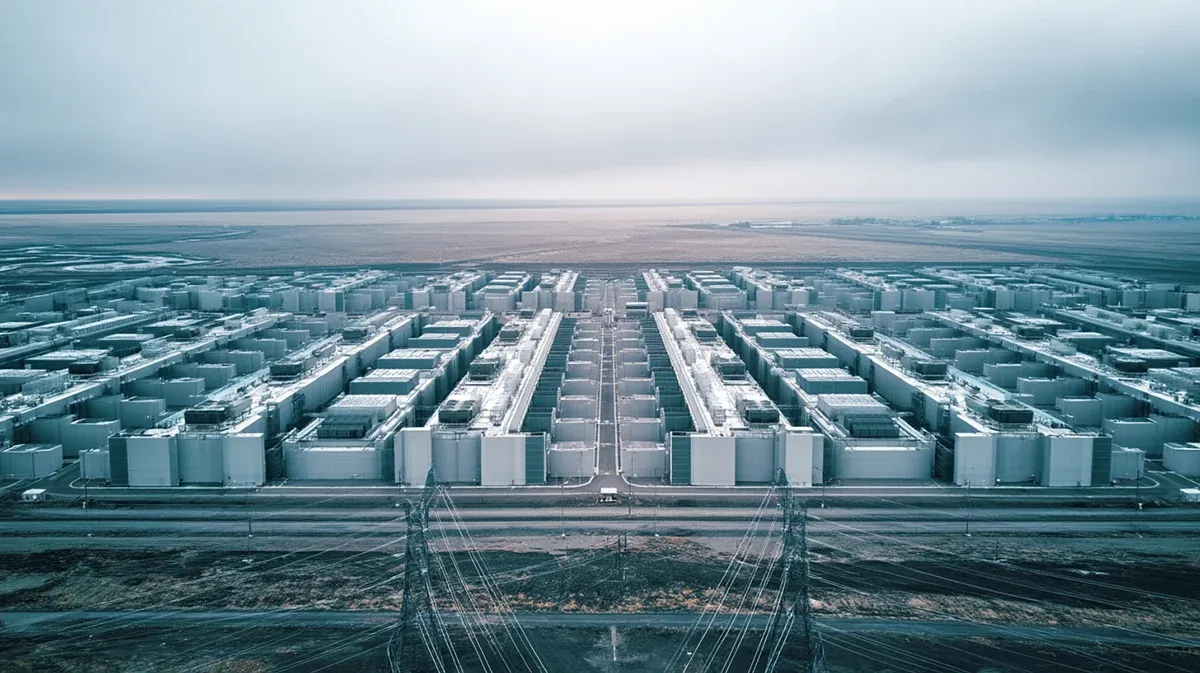
That conflict is no longer hidden by the language of innovation. Reuters reported on March 23 that NextEra had secured land in Texas for a gas plant of more than 5 GW tied to a major data-center campus, as part of a broader setup of up to 10 GW in Texas and Pennsylvania. Reuters also reported that Meta raised its El Paso AI data-center investment to $10 billion, with expected capacity of 1 GW. This is not abstract digital growth. It is industrial construction at gigawatt scale. AI is not merely using the energy system. It is beginning to reorganize grid investment, generation choices, and local infrastructure around hyperscale demand.
The bottleneck is not capital alone. It is whether physical systems can be expanded fast enough. Reuters Breakingviews reported on March 26 that Amazon, Microsoft, Alphabet, and Meta are expected to spend about $630 billion on AI infrastructure in 2026, but that the real constraint lies in queues and shortages: transformers, grid access, gas turbines, skilled labor, and construction capacity. The problem is not simply whether investors will keep funding AI. It is whether public and industrial systems can scale fast enough to sustain a private financial story of endless growth.
That is why local opposition is no longer background noise. Microsoft president Brad Smith said on March 24 that winning local trust has become essential because protests are rising around electricity prices, water impacts, and pollution tied to power infrastructure. Reuters also reported that resistance in cities and counties across the Midwest and Northeast has already contributed to data-center cancellations. This is no longer a simple clash between tech optimism and public anxiety. It is a distributional conflict over who captures the promise of the future and who inherits the infrastructure, risk, and resource burden required to stage it.
Texas shows the backlash in its clearest form. Once the buildout reaches this scale, AI stops looking like software and starts looking like a local utility war over land, rates, water, and grid capacity. The Houston Chronicle reported on March 28 that Texas politicians now want scrutiny of data centers’ effects on land rights, water infrastructure, electricity bills, the grid, and tax breaks. Louisiana shows the next step. Reuters reported on March 27 that Meta, in a revised agreement with Entergy, would pay its full cost for a hyperscale facility in Richland Parish. The important point is not whether that exact model holds everywhere. It is that once a company has to prove households are not subsidizing its load, the conflict is already inside the rate structure.
The energy mix makes the contradiction sharper. Reuters reported on March 24 that AI-driven demand is accelerating interest in long-duration energy storage because data centers need more stable power than traditional battery deployment was designed to provide. But the same boom is also driving more gas, because AI demand is arriving faster than cleaner firm power can be built. The future economy is therefore being anchored, at least partly, in fossil backup and local resource pressure.
The winners are not only the firms with the best models. They are the actors that can secure queue priority, special terms, private generation, favorable grid treatment, and political acceptance. Reuters reported on March 17 that data-center demand is already driving up both the size and price of long-term power purchase agreements in the United States. The losers are more diffuse and politically weaker: households, small businesses, and communities asked to host new gas plants, transmission corridors, cooling systems, and rising physical risk. What looks from Silicon Valley like acceleration looks from the ground like a political question with no neutral answer: who is the grid being reorganized to serve?
This is the real AI fight now. Not only who builds the best model, but who gets to define what the power system is for.