
Owning raw materials is not the same as controlling the value they generate. In the global economy, decisive power rarely rests with those who extract, but with those who refine, specify, finance, transport, and sell.
Resource wealth can make a country indispensable to a market while still leaving it dependent within it.
Owning raw materials is not the same as controlling the value they generate.
Resources provide leverage, but not control. Control emerges further down the chain, where raw materials are refined, standardized, financed, and turned into industrial products.
That is why many resource-rich countries remain weak within the very markets that depend on them. The issue is not simply what they export, but where they sit in the structure that allocates margins, concentrates learning, and determines strategic influence.
UNCTAD’s figures show how persistent that structure is. Between 2019 and 2021, 101 of 191 member states were commodity-dependent. Among developing countries, the share was 66.9 percent; among low-income countries, 96.4 percent.
This is not merely an export profile. It is a structural division of labour that keeps many commodity-producing countries in the least strategic parts of the world economy. They supply what the system needs, but not on terms they set.
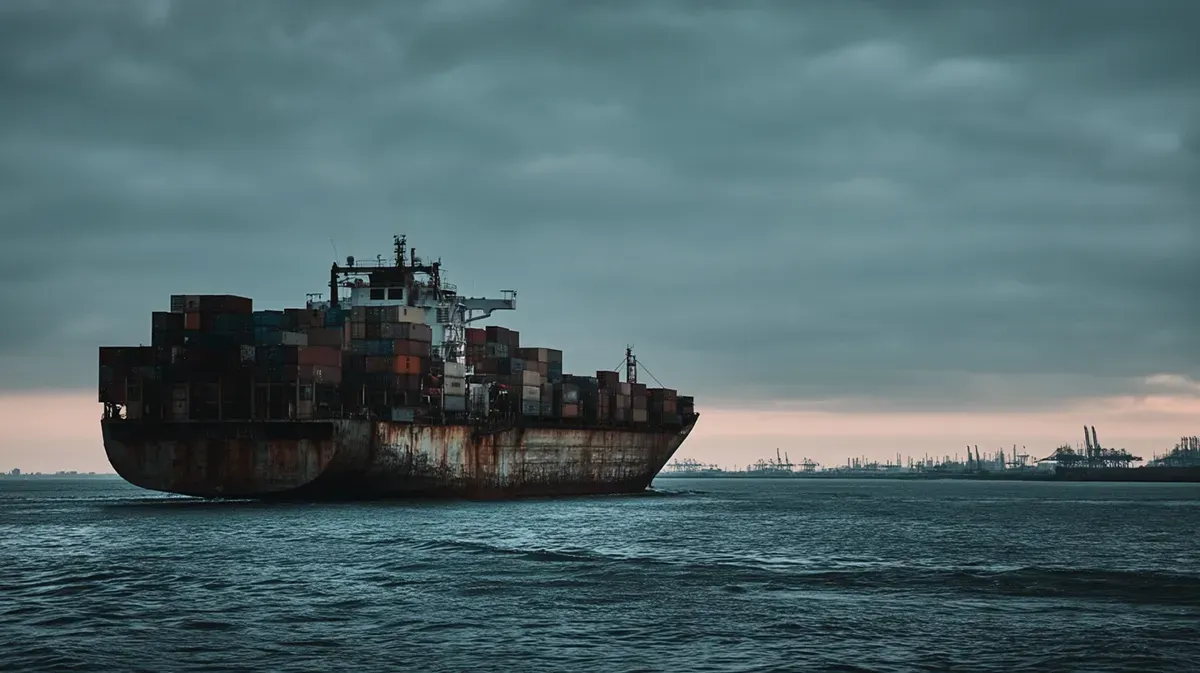
Resource wealth can create dependence just as easily as it creates leverage.
That outcome follows from how value chains work. Extraction is only the entry point. Much of the value is created later, in processing, engineering, logistics, finance, design, and market coordination.
OECD analysis of mining value chains points in the same direction: services account for a large share of the value embodied in mining exports. The decisive stages are often not those that extract the resource, but those that organize, refine, finance, and commercialize it.
This is why commodity dependence reproduces subordination even when export revenues are substantial. When processing, technical services, standards, and commercial access are controlled elsewhere, the exporting country does not just lose margins. It loses learning opportunities, industrial capabilities, and room to upgrade.
What leaves with the raw material is not only value, but part of the productive basis for future development.
The smile curve captures the basic pattern. In many global value chains, the highest returns sit at the ends: research, design, advanced inputs, branding, and distribution. Standardized production and extraction usually capture less.
The raw material may be indispensable, yet indispensability does not translate automatically into bargaining power. Those who control specifications, technology, and customer access usually control the most strategic parts of the chain, and therefore much of the chain’s real bargaining power.
The raw material may be indispensable, yet indispensability does not translate automatically into bargaining power.
The battery industry makes this unusually clear. Extraction is spread across countries such as Australia, Chile, Indonesia, and the Democratic Republic of the Congo. But downstream capacity is concentrated.
According to the IEA, China holds roughly three quarters of global battery cell capacity, around 70 percent of cathode material capacity, and about 85 percent of anode material capacity. It also processes more than half of the world’s lithium, cobalt, and graphite.
The result is simple: many countries extract, but far fewer control the stages that determine margins, standards, and industrial direction.

Many countries extract the minerals. Far fewer control the industrial stages that define value.
The Democratic Republic of the Congo is the sharpest example. It is central to global cobalt supply, which makes it important to the battery economy, but not powerful within it.
The country is systemically necessary, yet structurally weak within the chain. If refining, precursor production, cell manufacturing, finance, and end-market access are located elsewhere, Congo remains a supplier to a system it does not shape.
It is necessary, but still subordinate in the only sense that matters here: it does not control the stages that organize the rest of the chain.
And that is not just a technical feature of the battery value chain. It is a political fact about the green transition itself. A world economy presented as sustainable still concentrates control, learning, and industrial gain outside the countries that provide much of the material basis for it.
The transition may be green in output while remaining extractive in structure. If the countries that supply critical minerals continue to occupy the weakest positions in the chain, then the new energy economy will reproduce an old pattern: one set of countries provides the material foundation, while another captures the power to define what that foundation is worth.
The transition may be green in output while remaining extractive in structure.
That is the deeper problem with raw-material dependence. Countries locked into extraction alone do not merely earn less. They remain positioned in the segments with the weakest margins, the least technological learning, and the narrowest room for strategic action.
This is not only a question of lost value, but of lost strategic autonomy: the country becomes less able to direct its own development.
None of this makes industrial policy irrelevant. It means the opposite: industrial policy matters, but only when it builds real capacity. Export bans, domestic processing mandates, and local content rules do not create power on their own; without underlying capacity, they risk exposing weakness rather than overcoming it.
Poorly designed policy does not disrupt the hierarchy; it can end up reinforcing it.
That is why the real constraints are so concrete. Energy, transport, technical skills, finance, supplier networks, and market access are not secondary conditions. They are the basis of industrial power itself.
Without those foundations, the state may change the law, but not its position in the hierarchy. A country that builds processing, services, standards, and production capacity does more than retain income; it moves from supplying the chain to shaping it.

Laws alone do not shift hierarchy. Capacity does.
The winners in the commodity economy are therefore not those who merely possess resources, but those who control the stages that convert resources into industrial, commercial, and technological power. They set price layers, delivery conditions, quality requirements, and the direction of innovation.
The losers are the countries that remain necessary, but subordinate suppliers of extracted material: exposed to price shocks, cut off from the most valuable learning, and left with limited room to shape their own future. That is the central divide in the commodity economy.
Raw materials are therefore not control, but only the starting point in the struggle over control. Real power lies with those who command the stages that turn resources into industrial value, market access, and strategic leverage.
A country may own the deposit and still remain subordinate if others control processing, standards, finance, and downstream industry. The core divide is not between countries with resources and those without them, but between those that shape the chain and those that are confined to supplying it.
Raw materials are therefore not control, but only the starting point in the struggle over control.